
Appliance Garage Cabinet for Countertop Ideas

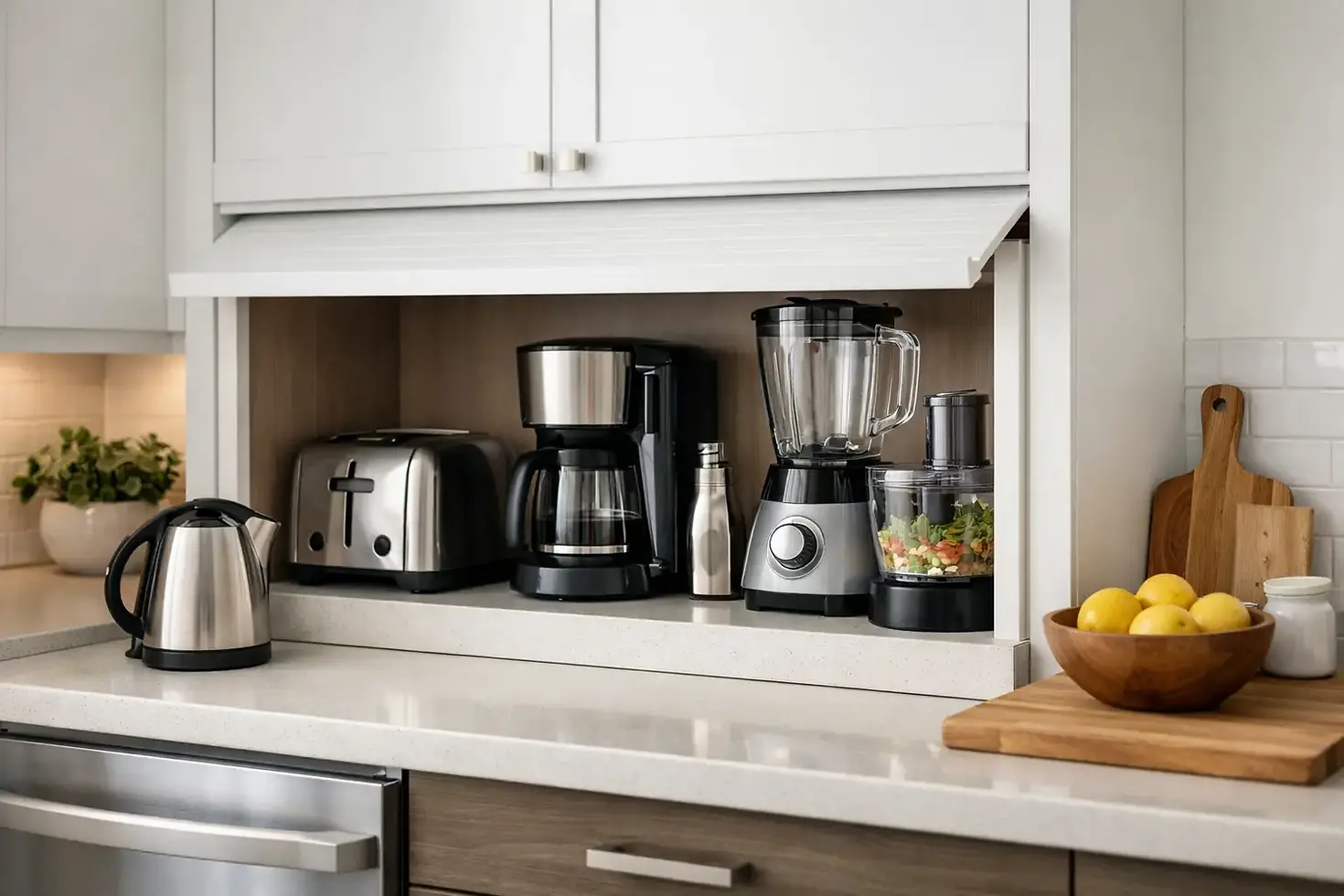
The toaster is out. The coffee station is spreading. The mixer claims a permanent corner. If that sounds familiar, an appliance garage cabinet for countertop storage is one of the smartest upgrades you can make in a kitchen that needs to work harder without looking busier.
For homeowners investing in custom cabinetry, this feature solves a very specific problem: you want everyday appliances close at hand, but you do not want them defining the room. Done well, an appliance garage keeps the countertop cleaner, protects visual flow, and gives your kitchen a more finished feel. Done poorly, it becomes an awkward box that steals workspace and does not fit the way you actually live. That difference comes down to planning.
What an appliance garage cabinet for countertop use actually does
An appliance garage is a dedicated cabinet built at countertop level to conceal small appliances while keeping them easy to access. Most often, it sits along the back of the counter or in a corner and blends with the surrounding cabinetry. The goal is simple: keep your coffee maker, toaster, blender, or stand mixer available without leaving them on display all day.
This is not just about hiding clutter. It is about making the kitchen feel calmer and more intentional. In many homes, the counter becomes a landing zone for the appliances used most often. That is practical, but it can make even a well-designed kitchen feel crowded. An appliance garage gives those items a place to live without forcing you to haul them in and out of a pantry cabinet every morning.
For families, frequent cooks, and homeowners planning a long-term renovation, that convenience matters. The best storage features are the ones that support your routine without adding friction.
Why this feature works so well in custom kitchens
Off-the-shelf cabinetry can make appliance storage feel like an afterthought. Custom work gives you more control over the dimensions, door style, interior clearance, and placement, which is exactly what this kind of cabinet needs.
Not every appliance garage should be deep, wide, or tall. A coffee setup has different needs than a baking station. Some homeowners want a simple enclosed nook for a toaster and espresso machine. Others want a larger cabinet with integrated outlets, shelf adjustments, and enough room to leave appliances plugged in and ready to use.
That is where custom design earns its value. Instead of forcing your routine into a standard box, the cabinet is built around how you use the kitchen. It can align with your counter depth, match your door profiles, and fit naturally into the layout rather than looking added on.
The best places to put an appliance garage cabinet for countertop storage
Placement is what makes this feature feel effortless. In most kitchens, the right location is near the zone where the appliance is used most often.
A coffee station appliance garage usually works best near the refrigerator or breakfast area, where morning traffic naturally gathers. A toaster garage makes sense near prep or serving space. A mixer cabinet can work near baking storage, especially if flour, bowls, and utensils are close by.
Corner installations are common because they take advantage of underused space, but they are not always the best option. Corners can be deep and efficient, yet they may also create access issues depending on the door type and the size of the appliance. Straight-run countertop garages are often cleaner, easier to use, and visually simpler.
The right answer depends on your kitchen’s traffic flow. If opening the cabinet interrupts prep space or crowds a walkway, the feature will not feel as convenient as it looked on paper.
Door styles change the experience
The cabinet door matters more than many homeowners expect. It affects not only the look of the kitchen but also how easy the garage is to use every day.
A tambour door is the classic appliance garage choice. It rolls up and disappears, which keeps the opening clear while the appliance is in use. This is a strong option when you want compact functionality, though the style needs to suit the rest of the cabinetry.
Pocket doors create a more tailored, furniture-like result. They open and slide out of the way, which is especially useful for wider garages or premium kitchen designs where clean lines matter. Lift-up doors can also work well, particularly in modern spaces, but they need enough clearance and quality hardware to avoid feeling cumbersome.
In some kitchens, hinged doors are still the right call. They are straightforward and can be beautifully integrated, but they require room to swing open and may stay in the way while you use the appliance.
This is one of those details where the most attractive option is not always the most practical. The best choice depends on cabinet width, appliance size, and how often the storage will be opened.
Size it for real life, not for guesswork
A common mistake is designing the cabinet around a vague idea of “small appliances” instead of the actual items that need to fit inside. That is how homeowners end up with cabinets that are too shallow for a coffee maker, too short for a blender, or too cramped to operate comfortably.
A good design starts with specifics. Which appliances are staying on the counter? How tall are they with lids open? Do they need to remain plugged in? Will you use them inside the cabinet or pull them forward onto the counter?
These questions shape depth, width, interior height, outlet placement, and shelf design. They also affect whether the cabinet should include ventilation or extra clearance around heat-producing appliances. A toaster oven, for example, has different requirements than a standard toaster.
Custom cabinetry works best when measurements reflect your routine, not a generic category.
Design details that make appliance garages feel built in
The most successful appliance garages do not look like separate storage boxes sitting on the counter. They feel integrated into the kitchen from the start.
That usually means matching the surrounding cabinet finish, aligning reveals and trim details, and keeping proportions consistent with nearby uppers and base cabinets. Interior finishes matter too. A durable, easy-clean surface inside the garage helps the space stay functional, especially for coffee stations or breakfast prep areas.
Lighting can elevate the feature, particularly in larger garages or beverage centers. Integrated outlets are often essential. In some cases, a stone or quartz interior counter surface inside the garage creates a cleaner, more durable work zone.
These details are subtle, but they are what separate a custom built solution from a standard add-on.
When an appliance garage is worth it - and when it may not be
This feature is not right for every kitchen. If your counters are already tight, a garage can take up valuable prep space unless it is carefully planned. If you rarely use the appliances you want to store, a pantry cabinet or dedicated shelf may be the better investment.
It is most worthwhile when the appliances are used often enough to deserve prime real estate, but not attractive enough to leave out all the time. It also makes sense for homeowners who care about a cleaner sightline across the kitchen and want storage that supports daily habits.
There is always a trade-off between concealment and immediate access. A well-designed appliance garage minimizes that trade-off. A poorly placed one exaggerates it.
Why custom planning matters before you build
An appliance garage seems simple until the details start stacking up. Clearance, electrical access, appliance dimensions, traffic flow, cabinet proportions, and finish continuity all affect whether the feature feels polished or frustrating.
That is why this is best handled as part of a broader cabinetry plan rather than as an isolated add-on. When it is considered early, the result is cleaner and more functional. It can be built into the kitchen’s working zones, aligned with your storage priorities, and finished to match the rest of the room.
At Stone Mill Cabinetry, that is the advantage of a consultation-first process. The goal is not to fit your kitchen into a preset cabinet option. It is to design around how you use the space, then build it to fit precisely.
If you are gathering ideas, view the gallery and look at how custom storage features are integrated into finished kitchens. If you are ready to talk through your layout, book a consultation and get clear direction before the details become expensive guesses.
A good kitchen does not just hide clutter. It gives everything a place that makes daily life easier.


Comments