

Cabinet Quality Checklist for Homeowners
- Willy Penner

- Mar 15
- 6 min read
A cabinet can look great in a showroom and still disappoint once real life starts. Doors shift. Drawers drag. Shelves bow. Paint chips at the corners. If you are investing in a kitchen, vanity, or built-in storage project, construction quality is what separates a cabinet that photographs well from one that holds up for years.
That is where a cabinet construction quality checklist helps. It gives you a practical way to judge what is behind the finish before you commit to a layout, a quote, and an installation schedule.
Why a cabinet construction quality checklist matters
Most homeowners compare style first. That makes sense. You are going to live with the look every day. But cabinet quality is built from the inside out. The box, the joinery, the hardware, and the fit all affect how the finished project performs.
A well-built cabinet should feel solid, open smoothly, close cleanly, and stay aligned through daily use. In a kitchen especially, heat, moisture, weight, and constant movement expose shortcuts fast. The same goes for bathroom vanities and closet storage. Good construction protects your investment and reduces the chance of callbacks, repairs, or early replacement.
Custom work also adds another layer. Quality is not only about stronger materials. It is about building for your space instead of forcing your space to adapt to a standard box.
The cabinet construction quality checklist homeowners should use
Start with the cabinet box. This is the structural core, and it carries the weight of doors, drawers, countertops, dishes, cookware, and daily use. Ask what material is being used for the casework. Plywood is often preferred for its strength and stability, especially in areas exposed to humidity changes. High-quality furniture-grade panel products can also perform well when selected properly. Thin, low-density materials tend to show their weaknesses over time.
Next, look at the thickness of the box components. Backs, sides, tops, bottoms, and shelves should feel substantial, not flimsy. A cabinet that flexes under hand pressure is telling you something. Shelving deserves extra attention in pantries, wide base cabinets, and closets, where long spans and heavy loads can create sagging.
Then check the joinery. Better cabinets use construction methods designed for long-term strength, not just speed. Dado joints, rabbets, dowels, screws, and other reinforced connections generally outperform stapled or lightly fastened assembly. You do not need every cabinet to be built the same way, but you do want the joinery to match the demands of the piece.
Drawer boxes are another giveaway. Open them fully. Look at the sides, bottom, and corners. A strong drawer box should feel rigid and glide without wobble. Dovetail joinery is a respected sign of craftsmanship, but it is not the only marker of quality. What matters most is that the drawer is well-made, well-supported, and sized for the load it will carry.
Hardware matters more than many homeowners expect. Soft-close slides and hinges are common now, but quality still varies. Look for smooth action, full extension where it is useful, and consistent alignment. If a door already looks off or a drawer rubs during a showroom visit, that is not a small issue. It usually gets worse with use, not better.
Materials, finishes, and where corners get cut
Not every painted cabinet is built the same, and not every wood cabinet is automatically better. Finish quality depends on surface prep, product choice, application method, and curing. Ask how painted surfaces are prepared and protected. A good finish should feel even, look consistent, and hold up at high-touch points like edges, handles, and sink areas.
For stained or natural wood cabinetry, consistency matters too. Grain variation is normal and often desirable, but the overall finish should feel intentional across doors, drawer fronts, and exposed panels. If one section looks noticeably different from the rest without a design reason, it may point to weak quality control.
You should also ask about interior finishes. Interiors are easy to overlook because they are less visible during the design phase. But you interact with them every day. Durable, easy-to-clean interiors add real value, especially in kitchens, laundry rooms, and mudroom storage.
There is also a trade-off worth noting here. Some homeowners want the lowest maintenance surface possible. Others care more about the character of real wood and custom finishing. Neither priority is wrong. The key is making sure the material and finish match how the space will be used.
Fit and installation are part of cabinet quality
A well-built cabinet can still underperform if the design is generic or the installation is rushed. This is one of the biggest differences between custom cabinetry and off-the-shelf options. Quality is not only in the box. It is in the fit.
In kitchens, uneven filler strips, awkward gaps, misaligned reveals, and poor use of corners can make an expensive project look average. In vanities and closets, stock sizes often leave wasted space that could have been turned into usable storage. A custom approach allows cabinets to follow the room, not fight it.
Ask how the project is measured, built, and installed. Does the team account for wall variation, flooring changes, appliance clearances, and trim details? Are finished end panels and moldings planned from the start, or added later as problem-solving pieces? A quality project should feel intentional from layout through final adjustment.
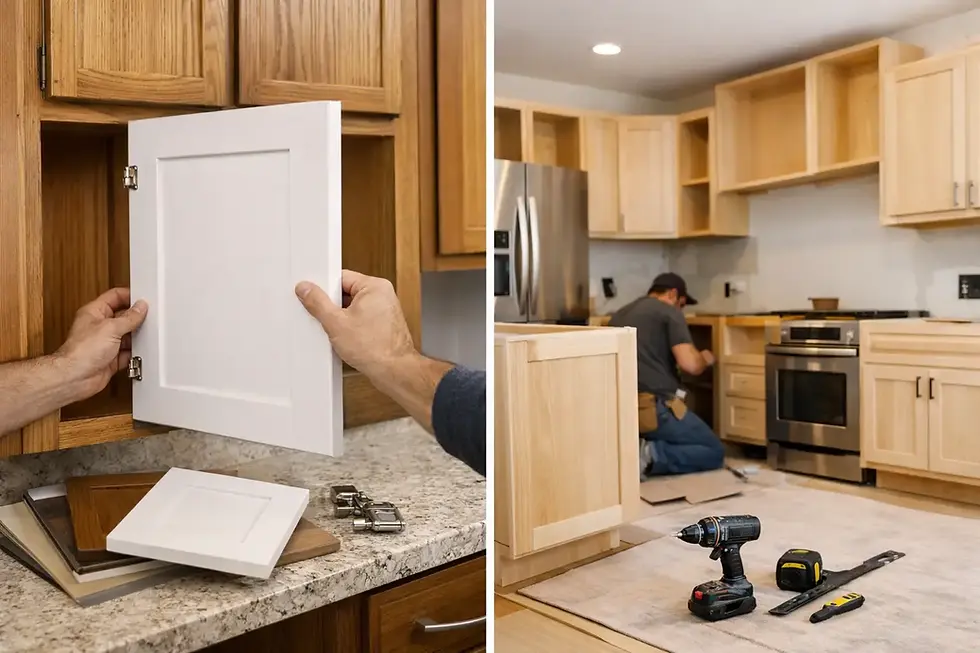
Installation details matter after the cabinets arrive. Cabinets should be level, plumb, securely fastened, and consistently aligned. Doors and drawers should be adjusted so reveals are clean and operation is smooth. These are small details until you live with them every day.
Questions worth asking before you buy
A strong checklist is not just visual. It includes the questions that reveal how a cabinet company works. Ask who builds the cabinets, what materials are used for the box and drawers, and how the cabinets are finished. Ask what hardware is included and whether upgrades are available where they actually improve performance.
You should also ask how the company handles design changes, site conditions, and final punch-list items. Quality is not only a product issue. It is a process issue. A dependable cabinet partner should be able to explain the path from consultation to install with clarity.
If you are comparing bids, do not assume similar pricing means similar value. One proposal may include better materials, more precise customization, stronger hardware, and more complete installation work. Another may appear competitive because it leaves out the very things that make cabinetry perform well over time.
That is why visual proof matters. Review completed projects. Study the finish consistency, proportions, trim details, and built-in fit. If testimonials are available, pay attention to comments about communication, reliability, and how the cabinetry has held up after installation. Those details usually tell you as much as a spec sheet.
Red flags to watch for
If a cabinet company is vague about materials, that is a problem. If they avoid discussing joinery, hardware brands, installation methods, or finish process, that is also a problem. You do not need a lecture in shop terminology, but you should get clear answers.
Be careful with pricing that feels too good for the scope. Cabinets are labor-intensive, and quality materials cost more than builder-grade substitutes. There is always a budget conversation, and smart value engineering has its place. But stripping away structure, finish quality, or fit usually becomes visible later.
Another red flag is a one-size-fits-all design approach for rooms that clearly need custom planning. Homes are full of quirks. Ceiling height, soffits, old walls, tight corners, plumbing locations, and traffic flow all affect cabinet design. Good cabinetry responds to those constraints rather than pretending they do not exist.
What quality looks like in practice
The best cabinets do not call attention to themselves for the wrong reasons. Doors line up. Drawers open without effort. The finish feels smooth and durable. Storage works the way your household actually lives. The project looks like it belongs in the home because it was built for that home.
That is the standard worth aiming for whether you are planning a full kitchen renovation, a vanity upgrade, or fitted storage elsewhere in the house. If you want to compare ideas against real built work, view the gallery at https://www.stonemillcabinetry.com and book a consultation when you are ready to talk through your space.
A good cabinet decision should leave you with more than a nice first impression. It should give you a room that feels finished, functions better every day, and still looks right long after the install crew has packed up.


Comments