

What Is Included in Custom Cabinetry?
- Willy Penner

- Mar 31
- 6 min read
If you are comparing cabinet options, the real question is not just price. It is what is included in custom cabinetry and whether that investment gives you a better fit, better function, and a better result for the way you live.
Custom cabinetry is more than a row of boxes with doors. A true custom project usually includes design guidance, made-to-order cabinet construction, material and finish selections, storage planning, trim and detail work, and professional installation. It is a tailored process built around your room, your priorities, and the final look you want to achieve.
That matters most in spaces where standard sizes fall short. Kitchens, bathroom vanities, mudrooms, laundry rooms, and closets often need cabinets to work around walls that are not perfectly square, appliances with specific dimensions, or storage needs that off-the-shelf options simply do not address.
What is included in custom cabinetry for most projects?
In most cases, custom cabinetry starts with a consultation. This is where layout, measurements, style preferences, storage needs, and overall project goals are discussed. Instead of asking you to fit your home into preset cabinet sizes, the design is built around the room you actually have.
From there, the scope usually includes cabinet design and space planning. That can mean adjusting cabinet depths, extending cabinetry to the ceiling, creating a better island layout, or fitting a vanity wall precisely between architectural features. It can also mean planning for pantry storage, pull-out accessories, drawer organization, or built-in features that make the room easier to use every day.
Cabinet fabrication is another core part of the package. The cabinets are built to the agreed dimensions and specifications rather than pulled from warehouse inventory. That allows more control over proportions, materials, construction quality, and details like inset doors, overlay style, panel profiles, and hardware placement.
The project often includes finish selection as well. Paint, stain, wood species, sheen level, and decorative details all affect the final result. In a well-managed custom process, these choices are guided rather than left vague. That is one of the biggest differences between a stressful remodel and one that feels organized from the start.
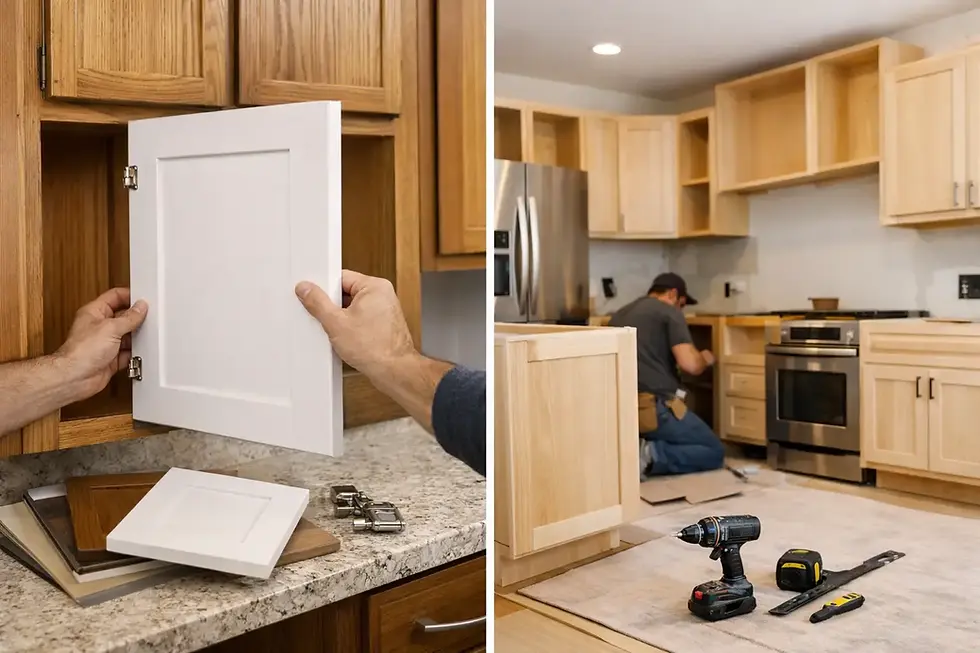
Finally, installation is typically part of the work. This is not a minor detail. Even beautifully built cabinetry can look wrong if it is installed poorly. Professional installation ensures reveals are consistent, doors and drawers operate correctly, trim fits cleanly, and the entire project reads as intentional.
Design and layout are part of the value
When homeowners ask what is included in custom cabinetry, they sometimes picture only the physical cabinets. In practice, one of the most valuable parts is the design thinking behind them.
A custom cabinet layout should solve problems before construction begins. Maybe your kitchen needs wider drawer banks instead of more upper cabinets. Maybe your bathroom vanity should include better drawer storage rather than false-front sink areas. Maybe your closet needs a combination of hanging, shelving, and concealed storage instead of a one-size-fits-all organizer.
These decisions affect how the room works every day. They also affect how polished the final space feels. A cabinet run that ends awkwardly, leaves filler in the wrong place, or fails to align with windows and appliances can make an expensive renovation feel ordinary. Custom design helps avoid that.
There is a trade-off, of course. More customization requires more decisions. If you want the fastest and simplest cabinet purchase possible, stock options may feel easier. But if your priority is a finished space that fits correctly and looks considered from every angle, the added planning is usually worth it.
Materials and construction quality
Not all custom cabinetry is built the same, which is why this part deserves close attention.
What is included in custom cabinetry often depends on the builder's construction standards. Ask what materials are used for cabinet boxes, drawer boxes, doors, shelves, and finished ends. Ask how drawers are joined, what slides and hinges are specified, and whether interiors are selected for durability as well as appearance.
Higher-quality custom work often includes stronger cabinet box construction, better drawer hardware, and more refined finish work. You may also have more control over wood species, door style, and panel details than you would with semi-custom or stock lines.
That said, more expensive materials are not always necessary in every area. A painted kitchen may call for one approach, while a stained vanity or built-in bar may call for another. Good guidance matters here. The right choice depends on how the cabinetry will be used, how much wear it will take, and what look you want long term.
Storage features that make the space work harder
This is where custom cabinetry often proves its value quickly. Good storage is not about adding more cabinets. It is about making space more useful.
A custom kitchen might include deep drawers for pots and pans, vertical tray storage, spice pull-outs, hidden trash storage, appliance garages, or a pantry wall designed around the items you actually buy. A vanity may include drawer storage around plumbing, integrated organizers, or a linen cabinet sized to fit the room instead of overpowering it. A closet may combine long-hang, double-hang, shelving, drawers, and accessory storage in a way that fits your wardrobe and routines.
These features are often part of the design conversation, but not every project includes every accessory by default. That is an important distinction. Custom means tailored, not automatically loaded with every available upgrade. The best projects focus on the features you will use, rather than adding complexity for its own sake.
Finishes, trim, and built-in details
The difference between basic cabinetry and a finished custom look often comes down to details.
End panels, crown molding, light valances, toe-kick treatment, decorative legs, furniture-style accents, and fitted trim all help cabinetry feel integrated with the architecture of the room. In kitchens, this can create a cleaner transition between cabinets and ceilings or walls. In built-ins, it can make storage feel like part of the home rather than an afterthought.
Finishes matter just as much. Color selection, stain depth, sheen, and texture all shape the final impression. Hardware also plays a major role. The right knob or pull can push a design more classic, more modern, or more transitional without changing the cabinet construction itself.
This is another area where expectations should be clear early. Some proposals include decorative trim and finished panels from the start. Others treat them as add-ons. A careful review of what is actually specified helps prevent surprises later.
Installation, coordination, and accountability
Cabinet projects do not succeed on design alone. They succeed when details are carried through from planning to install.
Professional installation usually includes placing and leveling cabinets, securing them properly, fitting fillers and panels, adjusting doors and drawers, and completing trim work so the project looks clean and complete. Depending on the project, coordination with countertops, plumbing, electrical, and appliances may also affect timing and sequencing.
This is where a consultation-driven company can offer real value. Clear communication, defined process steps, and hands-on project management reduce the uncertainty that many homeowners worry about during a renovation. You want to know who is responsible, what happens next, and how the finished space will come together.
That assurance is part of the product too. At Stone Mill Cabinetry, that process-focused approach is a major reason homeowners choose custom work over mass-market alternatives.
What may not be included automatically
It is smart to ask what falls outside the base cabinetry scope.
Countertops, tile, plumbing fixtures, electrical work, and appliances are often separate from the cabinetry contract. Interior organizers, specialty hardware, lighting, and paint-grade versus stain-grade upgrades may also vary by proposal. Even within cabinetry itself, there can be differences in whether removal of old cabinets, delivery, touch-ups, or final adjustments are included.
That does not mean the project is missing something. It just means custom proposals are specific. The right question is not whether every item is bundled. It is whether the scope is clear and supports the result you want.
How to evaluate a custom cabinetry proposal
A strong proposal should tell you more than cabinet count and price. It should explain what is being designed, built, finished, and installed.
Look for clarity around layout, dimensions, materials, finish selections, storage features, decorative details, and installation. If something matters to you, such as full-height uppers, soft-close drawers, a hidden microwave cabinet, or a fitted mudroom bench, make sure it is discussed directly.
It also helps to review past work. A project gallery and client testimonials can tell you a lot about consistency, craftsmanship, and how well a company handles custom details. If you are in the planning stage, view gallery examples and compare the level of finish from one project to the next. If you are ready to move, book a consultation and get specific about your space.
Custom cabinetry should feel personal, but it should also feel organized. The best projects give you both - tailored design and a clear path forward. If you are investing in cabinetry that will shape how your home looks and functions for years, make sure you are choosing a partner who builds with that level of care.


Comments