
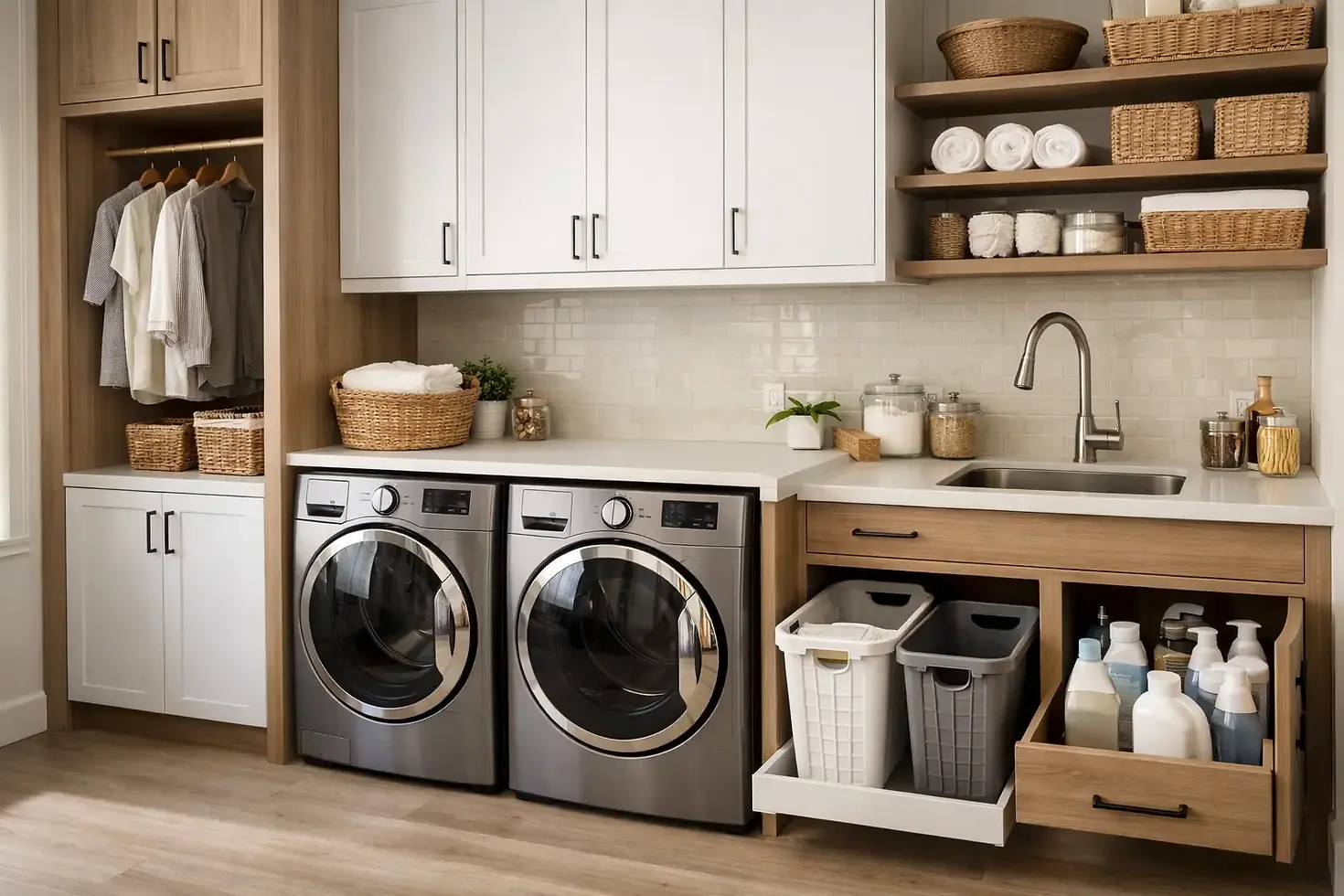
Custom Laundry Room Cabinets That Work
- Willy Penner

- Mar 11
- 6 min read
A laundry room usually becomes the catch-all space no one meant to create. Detergent gets stacked on the dryer, brooms lean in the corner, and the one shelf over the machines is never quite enough. If that sounds familiar, the problem is rarely the room itself. More often, it is storage that was never designed for how the space actually gets used.
That is where custom laundry room cabinets and storage make a real difference. Instead of forcing your routine into generic cabinets or wire shelving, a custom layout gives every task a place. Hampers, cleaning supplies, pet items, overflow pantry goods, seasonal gear - the room can be planned around what you need it to hold and how you move through it.
Why off-the-shelf storage often falls short
Laundry rooms are rarely standard. Machines vary in size, door swings matter, plumbing lines take up wall space, and many rooms double as mudrooms, utility zones, or secondary entrances. Stock cabinetry can help in a basic sense, but it often leaves awkward gaps, wasted corners, and shallow storage that looks fine on paper and frustrates you in real life.
Custom cabinetry solves for fit first. That means cabinets built to the exact width, height, and depth of the room, with attention to clearances around appliances, windows, sinks, and traffic paths. It also means the finished space looks intentional rather than pieced together.
There is also a design benefit homeowners notice right away. A laundry room with fitted cabinetry feels connected to the rest of the home. If you are already investing in a kitchen, mudroom, or bath update, carrying the same level of finish into the laundry space creates continuity that stock units rarely achieve.
What custom laundry room cabinets and storage should solve
A well-designed laundry room is not just about adding more cabinets. It is about making routine tasks easier and making clutter less visible.
For some households, the biggest need is concealed storage. Upper and lower cabinets keep detergents, stain removers, paper towels, and cleaning products behind doors, which is especially useful for families with children or pets. For others, the priority is work surface. A counter over front-load machines or beside a utility sink gives you a place to fold, sort, and treat stains without balancing baskets on top of appliances.
The best layouts usually address several needs at once. Tall cabinets can handle vacuums, mops, and ironing boards. Deep drawers can hold bulk supplies and laundry baskets more effectively than fixed shelves. Open cubbies may make sense near an entry if the room also functions as a drop zone for shoes, backpacks, or pet leashes.
This is where custom work stands apart. You are not choosing from a limited menu of cabinet sizes and trying to make them behave. You are building storage around your exact routine.
Smart cabinet ideas for real laundry rooms
Built-ins around the washer and dryer
One of the most effective uses of custom cabinetry is framing the laundry appliances with storage above, beside, or around them. Uppers above the machines are a straightforward improvement, but side cabinetry often adds the most value because it captures narrow vertical space that is otherwise lost.
If your room allows, a full-height cabinet next to the machines can store cleaning tools, extra linens, or household overflow. In tighter spaces, even a slim pull-out can create a dedicated home for detergent, dryer sheets, and stain products.
Countertops that make folding possible
A folding surface sounds simple until you have lived without one. Custom counters can be sized wall to wall or integrated into a cabinet run with room for baskets below. In smaller laundry rooms, that single move often changes the space from purely utilitarian to genuinely useful.
Material choice matters here. You want a surface that is durable, easy to wipe down, and appropriate for the level of moisture and wear in the room. The right selection depends on how heavily the space is used and whether it also serves as a sink or cleaning area.
Tall storage for awkward essentials
Every laundry room has long, bulky, or unattractive items that do not fit well on open shelves. Brooms, steam mops, drying racks, and ironing boards are the usual offenders. Tall cabinetry gives these items a proper place and keeps the room from feeling visually busy.
Interior fittings can make this even better. Adjustable shelves, hooks, and divided sections help one tall cabinet do the work of several scattered storage solutions.
Hampers and sorting drawers
If laundry piles up on the floor, the room is missing a system. Built-in hampers or deep pull-out drawers give clothing a designated place before wash day starts. Some homeowners prefer separate bins for whites, darks, and delicates. Others just want one hidden, easy-to-access compartment that keeps the room looking orderly.
This is a good example of where it depends on household habits. A family of five needs a different solution than a couple using the room twice a week. Custom cabinetry gives you room to decide based on volume, not guesswork.
Design choices that affect function
Storage planning is only part of the job. The details of the cabinetry matter because the laundry room is a high-use space.
Door style, finish, and hardware should fit the home, but they also need to wear well. Painted cabinetry can create a polished, built-in look, while stained wood tones can add warmth to a room that might otherwise feel purely practical. Hardware should be easy to grip with one hand when the other is holding a basket.
Shelf depth is another detail that gets overlooked. Deep shelves can hold more, but if they are too deep, small items disappear to the back. Drawers are often the better choice for frequently used supplies because they bring contents forward and reduce rummaging.
There is also the question of open versus closed storage. Open shelves can lighten the room visually and keep everyday items close at hand, but they only look good when they stay tidy. Closed cabinets offer a cleaner appearance and hide visual clutter. In most homes, a balanced mix works best.
Custom storage adds value beyond the laundry routine
A laundry room does more than support wash cycles. In many homes, it is part mudroom, part utility room, part overflow storage area. That means the right cabinetry can solve problems outside the room itself.
You may need space for pet food and supplies, bulk paper goods, reusable shopping bags, sports gear, or seasonal items. You may want a bench, cubbies, or a sink cabinet if the room connects to a garage or side entry. When cabinetry is designed with the rest of the home in mind, the laundry room starts carrying more of the household load.
That added function can also improve how the home feels day to day. Clutter gets contained, routines become easier, and the room stops being a source of low-level frustration. Homeowners often focus on kitchens first, and rightly so, but adjacent utility spaces have a surprising effect on the quality of daily life.
Why the build process matters
Custom cabinetry is only as good as the planning behind it. Measurements need to be exact. Appliance specifications have to be accounted for. Clearances, trim, electrical access, and installation sequencing all matter. A laundry room may be smaller than a kitchen, but the margin for error is not necessarily smaller.
That is why a consultation-led process matters. A good cabinet partner looks at the room as a whole, asks how you actually use it, and recommends a layout that balances storage, access, and finish. They should also be able to guide you on choices that affect longevity, especially in hard-working household spaces.
For homeowners who want fitted storage rather than a patchwork of products, working with a custom cabinet company brings clarity. You can view finished work, compare design approaches, and move forward with a plan that feels thought through. If you are considering a larger home update, this is also the right time to create consistency across nearby spaces.
If you are ready to improve a room that works harder than it looks, view gallery inspiration and book a consultation at Stone Mill Cabinetry. The right built-in solution can make even a compact laundry room feel cleaner, calmer, and far more useful.
A good laundry room does not need to be oversized or elaborate. It just needs to be built around the way you live, so every cabinet, shelf, and drawer earns its place.


Comments