

Custom Pantry Cabinets That Actually Fit Your Life
- Willy Penner

- Feb 17
- 6 min read
You know the moment - you open the pantry, something tips over, and the one item you need is buried behind three half-empty bags. Most pantries don’t fail because you need more square footage. They fail because the storage was never designed for the way you cook, shop, and live.
Custom built in pantry cabinets fix that problem at the source. Instead of trying to force a big-box “pantry system” into a not-quite-standard space, you get cabinets and interiors built to the exact dimensions of your home and the exact mix of items you store. The result is calmer, cleaner, and faster - not just prettier.
What custom built in pantry cabinets really change
A pantry isn’t a single cabinet. It’s a workflow zone. When it’s planned well, you can see what you have, reach what you use, and put groceries away without playing Tetris.
Custom pantry cabinetry changes three things at once: access, visibility, and capacity. Access improves when the items you use most sit at the right height and pull out toward you instead of disappearing into the back. Visibility improves when shelves and drawers are sized so you’re not stacking and hiding. Capacity improves because the design uses the full height, avoids dead corners, and accounts for door swing and trim details.
It also keeps the kitchen looking intentional. A custom pantry can match door styles, finishes, and hardware so the storage feels like it belongs to the room, not like an add-on.
Custom vs. semi-custom vs. “pantry organizers”
If you’re comparing options, here’s the honest trade-off: the more standardized the product, the more you’ll compromise on fit.
Stock and many semi-custom cabinet lines are built around set widths, set heights, and limited interior options. They can work well when your space lines up with their increments. When it doesn’t, you end up with filler panels, awkward gaps, or shelves that don’t match what you store.
Off-the-shelf pantry organizers can be helpful for renters or quick refreshes, but they rarely solve deeper issues like narrow clearances, uneven walls, or a pantry that needs to function as part of the kitchen’s daily rhythm.
Custom built in pantry cabinets are for homeowners who want the pantry to feel like it was always meant to be there - because it was. You pay for that precision, and you get it back every single day you use it.
Where custom pantry cabinets make the biggest difference
The spaces that benefit most are usually the ones that never behave like a rectangle.
A common example is the “almost-walk-in” pantry - deep enough to lose things, but too tight to move comfortably. Custom interiors can shift storage to one side, add pull-outs, and keep the aisle clear so the space finally functions.
Another is the pantry wall that’s doing too much: a refrigerator nearby, a doorway, a return vent, maybe a light switch in the wrong spot. Custom cabinet design works around those constraints instead of pretending they don’t exist.
And if your kitchen doesn’t have a true pantry, custom built-ins can create one. We often see homeowners carve out a tall pantry run near the fridge or turn an underused nook into floor-to-ceiling storage that looks original to the home.
Designing the interior: the details that matter
Good pantry storage isn’t about adding more shelves. It’s about matching storage types to item types.
Pull-out trays and roll-outs
If you’ve ever crouched to reach the back of a base cabinet, you already understand why pull-outs matter. Roll-out trays are ideal for snacks, canned goods, and small appliances you want accessible without living on the counter. They reduce wasted depth because everything comes forward.
Drawer stacks for categories
Drawers are underrated in pantry planning. Deep drawers can hold bags, boxes, and overflow supplies. Shallower drawers create a “category system” that’s easy to maintain - baking, breakfast, pasta, lunch, and so on. When every category has a home, the pantry stays organized longer.
Adjustable shelving, used strategically
Adjustable shelves are useful, but too many adjustable shelves can turn into clutter fast. The best approach is a mix: fixed shelves where you want consistency and strength, adjustable shelves where your storage changes seasonally.
Vertical zones for tall and awkward items
Brooms, vacuums, folding step stools, and oversized trays usually end up leaning in a corner. A custom pantry can dedicate a tall section for those items so they stop taking over the floor.
Clearances that feel good
This is where custom shines. A pantry can look right on paper and still feel cramped if the clearances are off. Depth, toe-kick space, door swing, and where you stand while opening drawers all matter. A good design anticipates how you’ll move in the space, not just what will fit.
Door style and finish: making it look like part of the kitchen
A pantry shouldn’t read as an afterthought. When the cabinetry matches the kitchen - door profile, paint or stain, sheen level, and hardware - it elevates the entire room.
That said, it depends on your goal. Some homeowners want the pantry to disappear into a wall of cabinetry, especially in open-concept kitchens. Others want it to stand out with a slightly different finish or interior color so it feels like a feature when opened. Either way can look premium. The right choice is the one that fits your home’s style and how visible the pantry is from main sightlines.
Common pantry layouts - and which one fits your home
Most pantry designs fall into a few proven shapes, but the best fit depends on your floor plan and how much you store.
A single-wall pantry run works well in smaller kitchens or where you’re adding storage near the fridge. It can still feel substantial when it goes tall and uses smart interiors.
An L-shaped pantry is great when you have a corner to work with and want to separate zones - everyday items on one leg, bulk or small appliances on the other.
A galley-style pantry can be extremely efficient, but only if the aisle width is planned carefully. If it’s too tight, it becomes frustrating. If it’s too wide, you lose the feeling of a purposeful workspace.
A true walk-in pantry is ideal when you have the space, but it still needs built-ins to stay organized. Without fitted interiors, walk-ins often turn into “storage rooms” instead of functional pantries.
Budget and value: where the money goes
Custom work costs more than standard cabinetry. That’s not a secret. The better question is what you’re paying for and whether it solves problems you actually have.
Custom built in pantry cabinets typically deliver value in three ways. First, you get maximum use of the space you already own, which can be more practical than trying to expand the kitchen footprint. Second, you reduce daily friction - the small annoyances that add up over years. Third, you raise the perceived quality of the home because buyers recognize thoughtful built-ins.
Where budgets can shift is in the interior complexity. A pantry with a few well-placed pull-outs and shelves may be enough. A pantry with many specialized drawers, spice pull-outs, or appliance lift hardware will cost more. The right scope depends on how often you cook, how you shop, and how strongly you want the pantry to support those habits.
What to expect from a consultation-driven custom build
If you’re considering a custom pantry, the best starting point is a real conversation about your space and your routines. A good consultation should cover measurements and constraints, but it should also cover the human details: who cooks, what you buy in bulk, whether kids need easy access to snacks, and what drives you crazy about the current setup.
From there, a defined build process matters. It reduces renovation uncertainty because you know what happens next: design direction, selections, build timeline, and installation coordination.
If you’re ready to see what a fitted pantry can look like in real homes, Stone Mill Cabinetry shares completed projects and walks clients through a clear design-to-install process.
The “it depends” decisions that make or break the result
There are a few choices that don’t have a single correct answer.
Full-height doors look clean, but they may limit quick visual scanning if you prefer open shelving inside a walk-in pantry. Open shelves can feel lighter, but they require more discipline to keep tidy.
Deep shelves hold more, but they can invite clutter unless they’re paired with pull-outs or bins. Shallow shelves improve visibility, but you may need more linear footage to store the same amount.
And lighting matters more than most people expect. If your pantry is dark, even the best layout will feel less usable. Sometimes the smartest upgrade is improving the light so the design performs the way it should.
A pantry should support your kitchen, not compete with it. When it’s designed around your routines and built to fit your space precisely, it becomes the quiet kind of upgrade you notice every day - the one that makes cooking feel easier and the whole kitchen feel more under control.
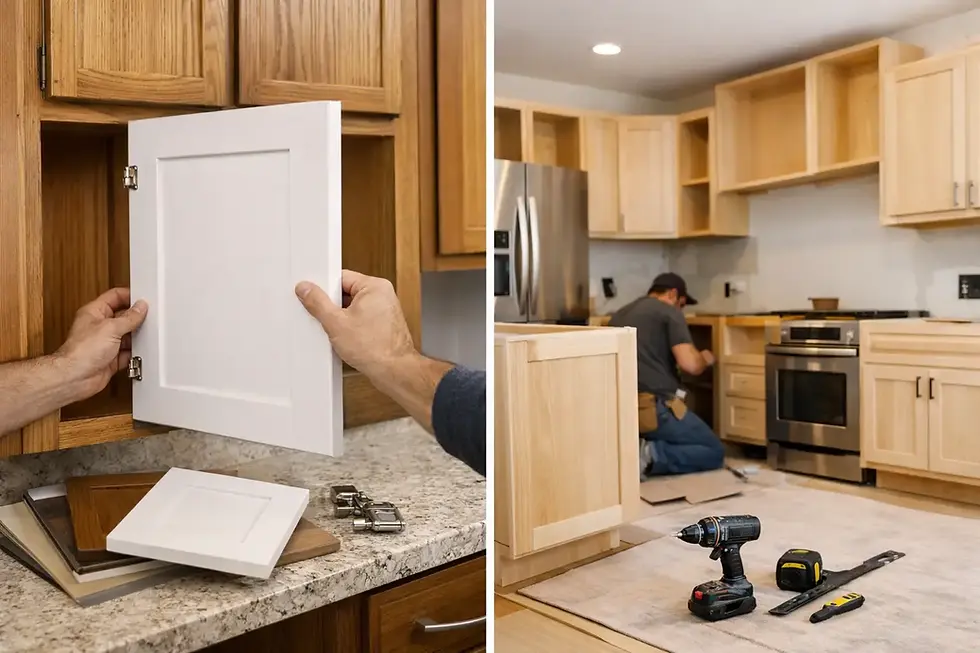


This pantry cabinet looks so practical and stylish! Perfect for keeping the kitchen organized.