
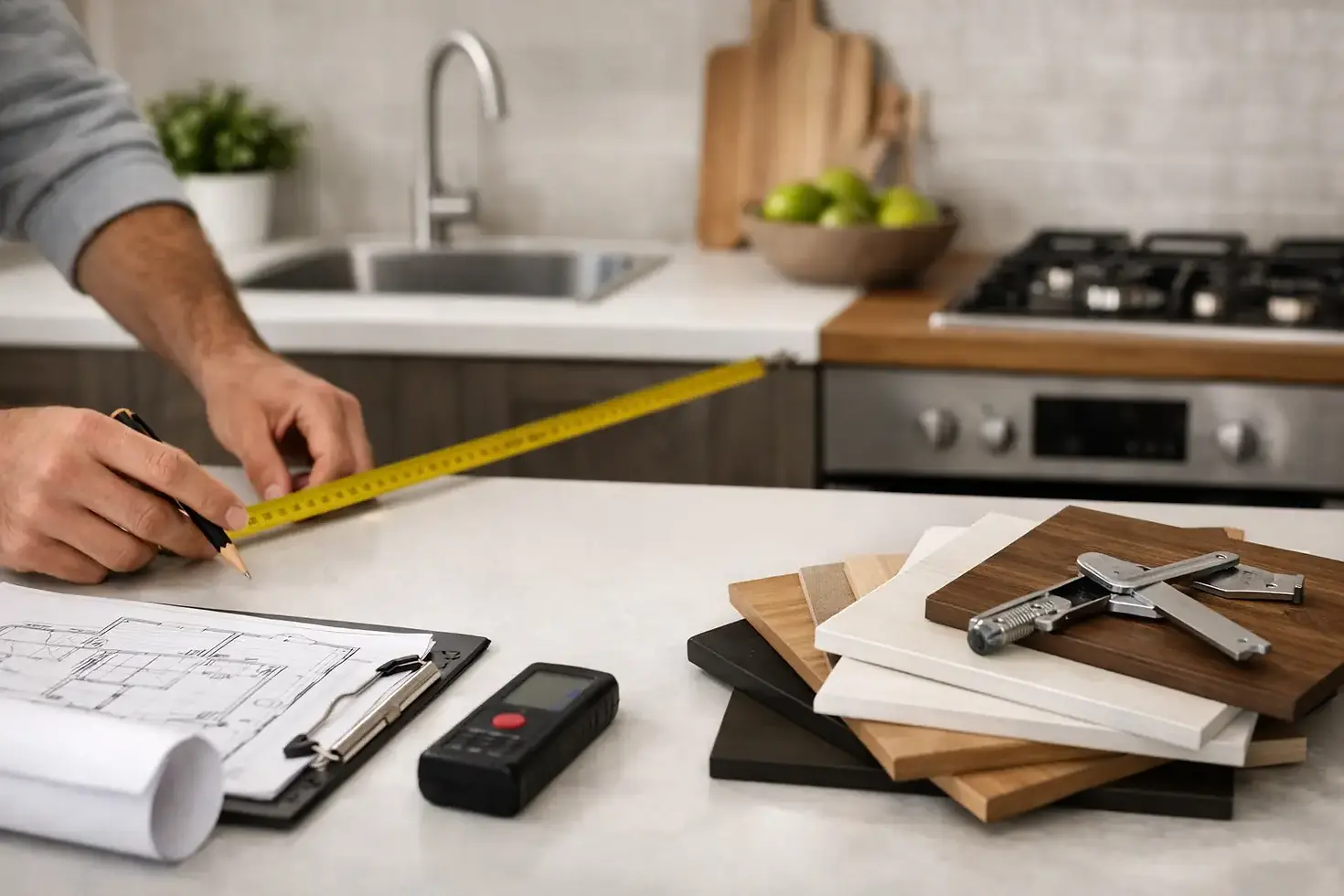
How to Measure Kitchen for Custom Cabinets
- Willy Penner

- Mar 23
- 6 min read
A custom kitchen starts with numbers, not finishes. Before door styles, paint colors, or storage upgrades come into focus, the first job is to measure kitchen for custom cabinets accurately. Good measurements help shape a layout that fits your room, your appliances, and the way you actually live in the space.
That does not mean you need to produce cabinet-shop drawings on your own. It does mean that a clear, careful field measure gives your designer a strong starting point and helps avoid the most common problems - wasted space, appliance conflicts, awkward fillers, and installation delays. If you are planning a renovation and want a kitchen that feels built for your home instead of forced into it, this step matters.
Why measuring the kitchen correctly matters
Custom cabinetry is different from buying a run of standard boxes and adjusting the room around them. The point of custom work is to make the cabinetry respond to the room. That includes wall lengths, ceiling height, window placement, floor slope, utility locations, and all the little irregularities older homes tend to hide until a project begins.
A kitchen can look straightforward at first glance and still be out of square by half an inch or more. Walls bow. Corners drift. Floors rise. Windows are not always centered. If those conditions are missed early, the design may look perfect on paper and become expensive to correct later.
When homeowners measure kitchen for custom cabinets before a consultation, the goal is not final production accuracy. The goal is clarity. You want enough reliable information to discuss layout options, budget ranges, storage priorities, and whether your wish list actually fits the room.
What you need before you start
Use a steel tape measure, a notepad, painter's tape, and your phone for reference photos. A laser measure can help with longer spans, but it should not replace a manual check. Measure in inches, and write everything down clearly. If a number is 124 and 3/8 inches, record it that way. Rounding too early creates problems.
It also helps to sketch the room before you begin. Keep the drawing simple. You only need a top-down layout and a few wall elevations. Label each wall so you do not confuse one set of measurements with another.
How to measure kitchen for custom cabinets
Start with the full room, then move to the details. That order keeps the layout grounded and reduces the chance of missing something important.
Measure every wall length
Measure each wall from corner to corner at the baseboard level if it is still in place, and note that condition. Then measure the same wall again a little higher off the floor if possible. In some rooms, the wall length changes slightly because the corners are not perfectly true.
Record each wall separately, even if two walls appear similar. Small differences matter when cabinet runs meet in a corner or when tall pantry units are involved.
Measure ceiling height in multiple spots
Do not assume the ceiling height is consistent across the room. Measure floor to ceiling at each corner and in a few spots along longer walls. If one side of the room is lower, that affects tall cabinetry, stacked uppers, crown details, and refrigerator enclosures.
If you are planning cabinets to the ceiling, this step is especially important. A room with a quarter-inch variation may still be manageable. More than that can change how the installation is detailed.
Measure doors, windows, and openings
For each door and window, measure width and height, then note the distance from the nearest corner to the edge of the trim or casing. Also measure the height from the floor to the bottom of each window. That single dimension often determines whether a sink wall can support a standard countertop height, a tile splash, or a specific faucet configuration.
If there are cased openings to other rooms, measure those too. Traffic flow and sightlines shape cabinet depth, island size, and where tall storage can go without making the room feel crowded.
Measure fixed elements and utilities
Next, locate anything that cannot easily move or that may affect cost if relocated. That includes plumbing, drains, gas lines, electrical outlets, switches, vents, recessed lights, and duct chases. Mark the centerline of each item and measure its location from the nearest corner.
This is one of the biggest differences between a rough homeowner sketch and a useful planning document. A beautiful cabinet design still has to work with the sink, range, hood, dishwasher, and refrigerator. If you know those points early, the conversation gets more productive.
Measure appliances carefully
If you are keeping existing appliances, get the model numbers and confirm their actual dimensions. Do not rely on memory. Appliance sizes vary more than many homeowners expect, especially with refrigerators, pro-style ranges, and built-in units.
Measure width, height, and depth. Note door swing and any clearance needed for handles or full opening. A refrigerator that technically fits into a width on paper may still feel cramped if the doors cannot open properly beside a wall or pantry panel.
Check corners and room conditions
Use a framing square if you have one, or compare diagonal measurements across the room and across larger openings. You are not trying to diagnose every construction issue. You are looking for clues that the room is out of square.
Also note any soffits, beams, bulkheads, radiators, floor vents, low sills, or uneven flooring. These conditions often drive custom solutions, and they are worth identifying from the start rather than treating them as surprises.
Common measuring mistakes to avoid
The most common mistake is measuring only the obvious spaces where cabinets will go. In reality, the entire room matters. An island, for example, depends on aisle width, traffic paths, appliance door clearance, and how the room connects to nearby spaces.
Another mistake is measuring to trim instead of the true wall surface without noting the difference. Trim can usually be addressed in design, but only if it is documented. The same applies to existing backsplash thickness, out-of-plumb walls, and flooring that may be removed or replaced.
It is also easy to forget vertical information. Many homeowners write down wall lengths and stop there. But upper cabinet placement, hood proportions, open shelving, and window alignment all depend on height measurements.
Finally, do not assume your preliminary measurements are enough for fabrication. They are enough to begin the conversation. Final field verification should always happen before a custom cabinet order is built.
What your cabinetmaker actually needs
A custom cabinet shop does not need a perfect architectural survey from you. What they need is a reliable picture of the room so they can assess feasibility, discuss options, and guide the next step.
That usually includes wall lengths, ceiling heights, door and window locations, appliance sizes, and photos of the space from several angles. If you can provide those clearly, the design process moves faster. You spend less time correcting avoidable assumptions and more time refining storage, finish, and function.
This is also where custom work starts to show its value. In a room with uneven walls, unusual dimensions, or design priorities that standard cabinetry cannot solve cleanly, accurate measurements create room for better decisions. Instead of forcing fillers and compromises everywhere, a tailored plan can use the full footprint more intelligently.
When to stop measuring and book the consultation
If you have a basic sketch, key dimensions, appliance information, and photos, you likely have enough to start. At that point, the smartest move is not chasing one more fraction of an inch on your own. It is getting an experienced cabinet professional involved.
A consultation helps translate rough dimensions into layout possibilities, realistic budgets, and a clearer project path. It also helps answer the questions homeowners usually have at this stage: Can an island fit? Should the pantry move? Is it worth taking cabinets to the ceiling? Can custom built-ins solve nearby storage needs too?
For homeowners who want a tailored result, that guided process matters as much as the measurements themselves. Stone Mill Cabinetry uses that early planning stage to shape cabinetry around the home, not force the home to accept a stock solution. If you are ready to move from rough measurements to a real plan, view the gallery for ideas or book a consultation to get the process started.
A well-measured kitchen does more than save time. It gives your project a cleaner start, and that usually leads to a better finish.


Comments