

Kitchen Cabinet Install Timeline: What to Expect

If you are trying to plan a kitchen renovation, the cabinet schedule is the part that either keeps everything moving or brings the entire project to a stop. Cabinets dictate where plumbing and electrical land, when countertops can be measured, and when appliances can actually be installed. So when a contractor says, “Cabinets take a few weeks,” it is fair to ask: a few weeks of what, exactly?
Below is a clear, realistic kitchen cabinet installation timeline - including the steps that happen before a single box is hung, what typically happens day-by-day during install, and the common reasons timelines stretch.
The kitchen cabinet installation timeline at a glance
Most homeowners picture “installation” as one event. In reality, your cabinet timeline has three phases: pre-install planning, on-site installation, and post-install finishing and coordination with the rest of the trades.
For many kitchens, on-site cabinet installation itself is often 2-5 days. But the full cabinet portion of the remodel (from final measurements to a kitchen ready for countertops) commonly runs several weeks, and sometimes longer when you include custom build lead times, design approvals, and specialty finishes.
The key is separating lead time from labor time. Labor is the crew on site. Lead time is everything that must happen to ensure what is installed actually fits and looks like it was meant to be there.
Before installation: the decisions that protect the schedule
Design, layout, and selections (often 1-3 weeks)
A smooth install starts with a layout that is resolved. That means appliance specs are confirmed, sink size is chosen, and storage needs are addressed before cabinets are built. If you change from a 30-inch range to a 36-inch range late in the process, you may not just be swapping appliances - you may be rewriting the cabinet plan.
This phase can move quickly when decisions are ready, or it can stretch when the kitchen is still evolving. The trade-off is simple: faster early decisions usually mean fewer surprises later.
Field measuring and verification (often a few days to schedule)
Accurate measurements are the difference between a clean install and a costly scramble. Walls are rarely straight. Floors can dip. Windows and soffits are often “close enough” until you try to set crown or scribe a tall pantry.
Good measuring is not only about width and height. It also accounts for out-of-square corners, ceiling variations, and how openings line up visually once doors and drawer fronts are installed.
Cabinet build lead time (varies widely)
This is the part that changes most from project to project. Stock cabinets may be available quickly. Semi-custom can take longer. True made-to-order cabinetry typically has a longer lead time because it is built specifically for your space and finish selections.
If you are planning a remodel around a hard deadline (a holiday, a move-in date, a rental turnover), talk about that deadline early. Sometimes the right answer is adjusting finish complexity, phasing the project, or choosing where custom work matters most.
Site readiness: demo and rough-ins (usually 1-2 weeks)
Cabinet installation should not be scheduled until the room is ready to receive cabinets. That usually means:
Existing cabinets are removed, walls are repaired, and the floor situation is decided. If new flooring is going under cabinets, it should be installed first. If flooring stops at the cabinet toe kick, that needs to be planned so the finished heights still land correctly.
Rough plumbing and electrical are completed and inspected where required. Moving a sink, adding undercabinet lighting, or relocating outlets are all common, and they are much easier before cabinets are on the wall.
Drywall and paint are done. Touch-ups happen later, but you want stable, finished surfaces so cabinet scribing and final alignment are consistent.
Installation week: what happens on site
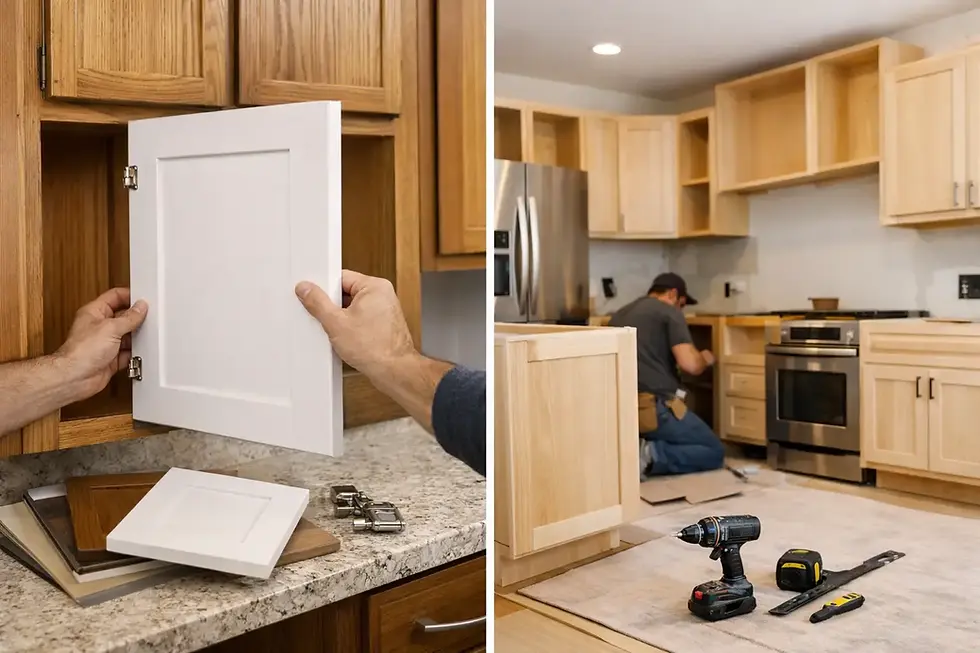
Day 1: delivery, protection, and layout
A professional install starts with protecting the home and staging materials. Floors are covered, pathways are kept clean, and boxes are checked against the plan.
Then layout work begins. Installers establish level lines on the wall, locate studs, confirm corner conditions, and verify that the plan still matches the room as it exists today. If a wall was “fixed” during demo but is still out of plumb, this is when the team plans for scribing, fillers, or slight adjustments.
Days 1-2: base cabinets set and leveled
Base cabinets are the foundation for the entire kitchen. They are leveled, fastened, and aligned so drawers run true and countertops have the support they need. Islands are secured and often require extra attention because they must be square to the room and centered to lighting and traffic paths.
If your kitchen has tall pantry cabinets, those are often set early as well because they establish vertical reference points for uppers and crown.
Days 2-3: wall cabinets, trim, and hardware planning
Wall cabinets go up once base lines are confirmed. Installers check reveals (the consistent gaps between doors and frames), adjust for ceiling variation, and keep cabinet runs straight across long walls.
Trim and panels may begin now, depending on scope. This includes end panels, refrigerator panels, light rail, and any applied molding details.
Hardware can be installed during this phase or held until later, depending on finish protection and how the rest of the trades are scheduled.
Days 3-5: details, adjustments, and readiness for countertops
This is when the kitchen starts to look “done,” even though you are not finished yet. Doors and drawers are adjusted, fillers are scribed tight to walls, toe kicks are installed, and decorative elements are finalized.
Once cabinetry is secure and level, the kitchen becomes ready for countertop templating. That templating appointment is a milestone because it often sets the next wave of dates.
After installation: the coordination that finishes the kitchen
Countertop templating and fabrication (often 1-3 weeks)
Templating usually happens after cabinets are installed because the countertop must match the exact cabinet positions. If you have a large island, waterfall edges, or multiple seams, this step becomes even more critical.
Fabrication timing depends on material availability, shop schedule, and edge detail. Natural stone can require additional planning based on slab selection and vein layout. Quartz is often more predictable, but still scheduled.
Sink, plumbing, and appliances (often 1-5 days)
After countertops are installed, the sink can be mounted, plumbing finalized, and appliances set. Some appliances require panels or precise clearances. A built-in refrigerator or a paneled dishwasher can add time, not because it is difficult, but because the fit must be exact for doors to operate cleanly.
Final punch list and touch-ups (often 1-2 visits)
A responsible cabinet project ends with a punch list. That may include small adjustments, paint touch-ups, or minor hardware alignment. Wood can move slightly with humidity changes, and hinges sometimes need a final tweak once the kitchen is in regular use.
If your project includes custom millwork beyond the kitchen - a pantry, mudroom built-ins, or a matching vanity - some punch work may be coordinated across spaces to keep disruptions minimal.
What can slow down a kitchen cabinet installation timeline?
Most delays are not caused by the cabinet crew. They are caused by the jobsite being unready or decisions changing after the build is underway.
The most common schedule-extenders are late appliance specs, flooring changes after cabinet heights are set, hidden wall issues discovered during demo, and trades stepping on each other. If electricians are still opening walls while cabinets are being installed, something will give, and it is usually the schedule.
Finish choices can also affect timing. Specialty paints, custom stains, and certain sheens may require additional curing time or more careful handling on site.
What can speed it up without cutting corners?
The fastest kitchens are not the ones that rush installation. They are the ones that remove uncertainty early.
Confirm appliance models and sink specs before finalizing cabinet plans. Decide where lighting will go and how switches will be controlled. Make sure your contractor has a clear plan for flooring transitions and finished heights.
Also, allow room for a clean handoff between trades. When cabinet installers can work in a space that is painted, dry, and cleared, they can focus on fit and alignment instead of navigating obstacles.
Planning your calendar: a simple way to set expectations
If you are building your remodel calendar, start from the milestone that matters: the date you want the kitchen functional. Then work backward.
Countertops often need at least a couple of weeks between templating and install. Templating cannot happen until cabinets are installed and secure. Cabinets cannot be installed until rough-ins, paint, and site conditions are ready. That backward planning approach usually exposes the real constraint quickly.
If you want a guided, made-to-order approach with clear checkpoints from design through install, Stone Mill Cabinetry walks homeowners through a defined process and real project examples at https://www.stonemillcabinetry.com.
A closing thought
When you ask for a kitchen cabinet installation timeline, do not settle for a single number. Ask what must be true before the crew arrives, what “install complete” actually means, and which decisions lock the schedule in place. The best projects are not the ones that move the fastest - they are the ones that move predictably, with craftsmanship you will still appreciate years from now.


This was a great read. Thanks for explaining the topic so clearly. Quality information about Installation Appliances isn't always easy to find, so I really appreciate you sharing your knowledge.